How to Grow Peppers Indoors: A Complete Guide to Year-Round Harvests
Growing peppers indoors gives you fresh, homegrown peppers every month of the year, regardless of your climate or outdoor space. Whether you're working with a sunny apartment windowsill or a spare corner under grow lights, indoor pepper plants thrive with the right setup. The key is understanding what peppers actually need: intense light, warm temperatures, and a container with good drainage. Get those three things right, and you can harvest jalapeños, mini sweet peppers, or Thai chilies all year long without ever stepping outside. In this guide, you'll learn which varieties work best indoors, how to set up grow lights for success, which containers to choose, and exactly how to get your plants from seedling to first harvest.
💚 Exclusive Discount
Use code WINDOWHARVEST for 10% off all Click & Grow Smart Gardens.
The discount applies automatically through our affiliate links, or enter the code manually at checkout.
What You'll Need
Before you start, gather these essentials:
- Full-spectrum grow lights (14-16 hours per day)
- 3- to 5-gallon containers with drainage holes (5+ gallons for bell peppers)
- High-quality potting mix or hydroponic growing medium
- Pepper seeds or established seedlings
- pH testing kit (essential for hydroponic setups)
- Small paintbrush or electric toothbrush for pollination
- Thermometer to monitor growing temperatures
- Balanced fertilizer or hydroponic nutrients
Best Pepper Varieties for Indoor Growing
Not every pepper variety thrives indoors. You want compact, productive plants that don't demand a greenhouse's worth of space. These varieties consistently perform well under artificial light in containers:
Lunchbox mini peppers are ideal for indoor growing. They stay compact, produce abundantly, and mature in 60-70 days from transplant — faster than most pepper varieties. The flavor is sweet and snackable straight off the plant. Cayenne peppers are another excellent choice: they're vigorous, prolific, and adapt well to container growing. Jalapeños are reliable and give you familiar kitchen heat in 70-80 days. Thai chili peppers are compact by nature, produce dozens of small hot peppers, and are especially well-suited for smaller pots. Banana peppers work well under grow lights and mature in 65-75 days. Shishito peppers are a trendy option that's surprisingly beginner-friendly indoors — mild, quick-maturing (around 70 days), and prolific. If you want to try bell peppers indoors, it's possible, but they need 5+ gallon containers and a longer growing season (90+ days), so they're better for experienced growers.
Light Requirements: The Most Important Factor
Peppers are high-light plants. They evolved in tropical and subtropical climates with intense sun, and that appetite for light doesn't change indoors. Plan for 14-16 hours of light per day from a dedicated grow light. Windowsill light alone — even a south-facing one — usually isn't enough, especially in winter.
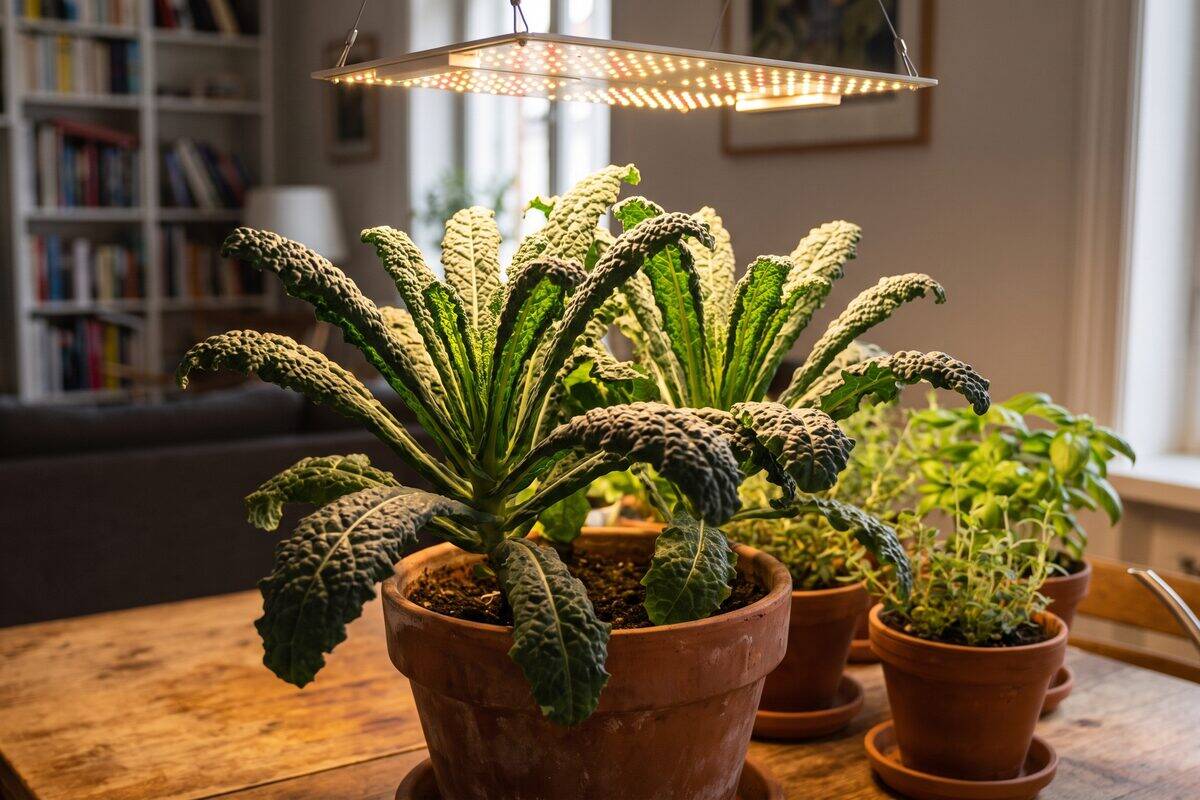
Position your grow light 6-12 inches above the plant canopy and raise it as your plants grow. Use a timer to automate the light cycle so you don't have to remember to turn it on and off each day.
For most small indoor setups, the Barrina T5 LED strips are a go-to choice. They're affordable, easy to mount under a shelf or above a seed rack, and deliver full-spectrum light that peppers need for both vegetative growth and fruiting. A set of six 2-foot strips covers a solid growing area without overheating your space.
→ Check Barrina T5 LED Strips on Amazon
The GooingTop clip-on lamp is a flexible alternative if you're growing one or two plants and want adjustable positioning. Its gooseneck design lets you direct light precisely, and it includes a built-in timer for 3, 9, or 12-hour cycles.
→ Check GooingTop Clip Lamp on Amazon
For serious growers with a dedicated space or multiple plants, the VIPARSPECTRA LED panel is a step up. It's dimmable, covers a larger canopy, and produces the kind of light intensity peppers need to set heavy fruit. The daisy-chain feature lets you expand your setup without adding new power outlets.
→ Check VIPARSPECTRA LED Panel on Amazon
Choosing the Right Container
Container size matters more for peppers than for most herbs. Their root systems need room to develop, and a cramped pot leads to stressed plants that produce fewer peppers. Use at least a 3-gallon container for compact varieties like Thai chilies or Lunchbox peppers. Jalapeños and cayennes do better in 4-5 gallon pots. Bell peppers need 5+ gallons.
Whatever container you choose, drainage is non-negotiable. Peppers don't tolerate soggy roots, and waterlogged soil is one of the quickest ways to kill an indoor pepper plant.
The SiliFine rectangular planter is a practical choice for tabletop or shelf growing. Made from breathable fabric, it prevents root circling and promotes healthy air pruning of roots — which means healthier plants and better yields. The rectangular shape also stacks efficiently if you're growing multiple varieties.
→ Check SiliFine Rectangular Planter on Amazon
If you travel or want to reduce how often you water, a self-watering pot is worth considering. The Gardenix self-watering pots have a built-in water reservoir that feeds the plant from below, keeping moisture consistent without waterlogging the roots. Peppers are sensitive to both drought and overwatering, so this kind of consistent moisture management helps.
→ Check Gardenix Self-Watering Pots on Amazon
For a premium option that looks as good as it functions, the Lechuza Classico 35 is a self-watering planter with a moisture indicator and a clean, modern design. It's roomy enough for jalapeños or cayennes and blends into any living space without looking like garden equipment.
→ Check Lechuza Classico 35 on Amazon
Step-by-Step Growing Guide
- Start with seedlings if you can. Growing from seed adds 6-8 weeks before transplant. If you're new to indoor peppers, start with established seedlings from a nursery or garden center and skip the germination stage.
- Fill your container with quality potting mix. Use a well-draining, nutrient-rich potting soil — not garden soil, which compacts in containers. Leave 1-2 inches of space at the top for watering.
- Set your temperature. Peppers prefer 70-85°F (21-29°C) during the day and won't tolerate temperatures below 55°F at night. Keep them away from cold drafts near windows in winter.
- Set up your grow lights. Position lights 6-12 inches above the plants and run them for 14-16 hours per day. Use a timer so you don't have to think about it.
- Water consistently. Water when the top inch of soil feels dry. Never let peppers sit in standing water. In containers, this usually means watering every 2-4 days depending on your environment.
- Fertilize regularly. Start with a balanced fertilizer during vegetative growth. Once flowers appear, switch to a lower-nitrogen formula to encourage fruiting rather than leafy growth.
- Manage pH. For soil-grown peppers, aim for a pH of 6.0-6.8. For hydroponic setups, keep it at 5.5-6.5. Off-pH soil locks out nutrients even when you're feeding regularly.
If you're interested in a soil-free approach, hydroponic systems like the AeroGarden Harvest Elite are designed for exactly this kind of setup. They include built-in grow lights, automated nutrient delivery, and a water level indicator, making them an excellent starting point for growing peppers without the soil management.
→ Check AeroGarden Harvest Elite on Amazon
Alternatively, the Click & Grow Smart Garden 9 Pro is a plug-and-play system that handles watering and light automatically. It's a solid choice if you want to experiment with indoor peppers without building out a full grow light setup from scratch.
→ Check Click & Grow Smart Garden 9 Pro on Click & Grow
Need to manage pH for your hydroponic setup? The General Hydroponics pH kit is the standard solution — it includes both pH up and pH down solutions along with a test kit so you can dial in your water chemistry precisely.
→ Check General Hydroponics pH Kit on Amazon
Pollination Tips for Indoor Peppers
Peppers are self-pollinating, which means each flower contains both male and female parts and can fertilize itself. Outdoors, wind and insects handle the job. Indoors, you need to do it manually — and it only takes a minute.
The simplest method is to gently shake the plant or individual flower clusters once per day when flowers are open. This mimics the vibration of wind and releases pollen within the flower. You can also use a small soft paintbrush or the end of an electric toothbrush pressed lightly against each flower cluster. Run the vibrating brush along open flowers — the vibration transfers pollen efficiently.
You'll know pollination worked when the base of the flower swells and begins forming a small pepper. If flowers drop without fruit setting, the problem is usually low light, temperature stress, or insufficient pollination.
Harvesting Your Indoor Peppers
Most pepper varieties are ready to harvest 70-90 days from transplant, though compact varieties like Lunchbox peppers can come in as early as 60 days. Peppers are edible at any stage — you don't have to wait for them to change color. Green jalapeños and cayennes taste sharp and grassy. Let them ripen to red and the flavor deepens and sweetens.
Always cut peppers from the plant with scissors or a small knife — don't pull or twist them off. Tearing the stem can damage the plant and leave it vulnerable to disease. Leave about a quarter inch of stem attached to the pepper when you harvest.
Once your plant starts producing, harvest regularly. Leaving mature peppers on the plant signals it to slow down new fruit development. The more you harvest, the more the plant produces.
Troubleshooting Common Problems
Flowers dropping before fruit sets: Usually caused by temperature stress (too hot or too cold), insufficient light, or lack of pollination. Check that your space stays above 55°F at night and that you're providing 14-16 hours of light.
Yellow leaves: Often a nutrient deficiency, overwatering, or pH imbalance. Check your soil pH and reduce watering frequency. If you're on a consistent feeding schedule and pH is correct, the culprit is usually overwatering.
Slow or no fruit production: The #1 cause in indoor peppers is insufficient light. Peppers need more light than most indoor plants — if your current grow light isn't cutting it, upgrading to a more powerful LED panel usually makes an immediate difference.
Leggy, stretched plants: This means your light source is too far away or too weak. Lower the light closer to the canopy (keeping it 6-12 inches above) or add supplemental lighting.
Pests: Aphids and spider mites are the most common indoor pepper pests. Inspect the undersides of leaves regularly. A spray of neem oil or insecticidal soap handles most infestations before they get serious.
Related Guides
Ready to build out your full indoor setup? These guides will help:
- Best Grow Lights for Indoor Herbs — our top picks across every budget
- Hydroponics for Beginners — grow without soil using simple systems
- Best Containers and Pots for Indoor Edibles — complete buying guide
- Best Indoor Herb Garden Kits — all-in-one systems reviewed