You just sliced the last of your green onions, and you're about to toss the rooty white ends in the compost. Stop. Those scraps are about to become your first kitchen garden — no seeds, no soil, no gardening experience required.
Kitchen scrap gardening is exactly what it sounds like: you take the parts of vegetables you'd normally throw away, stick them in a bit of water (or soil), and watch them regrow. It's free, it's fast, and it's one of the most satisfying things you can do on a windowsill. This is the gateway to indoor growing — and once you start, you won't stop.
Why Kitchen Scrap Gardening Works
Many vegetables store energy in their roots, stems, or leaf bases — energy that was meant to support new growth. When you cut a green onion above the roots, those roots still have everything they need to push out fresh shoots. The plant doesn't know it's on your countertop; it just does what it's hardwired to do.
Not everything regrows equally well. Some scraps, like green onion bulbs and romaine hearts, regenerate incredibly fast. Others, like celery and bok choy, produce usable new leaves but take a bit longer. A few — like avocado and mango — can technically regrow but take months and rarely produce useful food indoors. In this guide, we'll stick to the ones that actually work, fast enough to keep you motivated.
The Best Vegetables to Regrow from Scraps
Green Onions (Scallions) — The Easiest Win
If there's one scrap you should start with, it's green onions. Cut your scallions about an inch above the white root end, place the root ends upright in a small glass with about an inch of water, and set them on a bright windowsill. You'll see growth within 24 hours. In 5–7 days, you'll have full-length green tops ready to harvest again.
Change the water every couple of days to prevent bacterial buildup. You can regrow the same bunch 3–4 times before the flavor starts to fade. After that, transplant them into a small pot of soil and they'll keep going indefinitely.
A small jar works fine, but if you want to grow several bunches at once without them tipping over, a dedicated container helps. The Cole & Mason Herb Keeper doubles perfectly as a scallion propagation vessel — it keeps the stems upright and the right amount of water at the roots.
→ Check Cole & Mason Herb Keeper on Amazon
Romaine Lettuce and Other Head Lettuces
Cut your romaine hearts or butter lettuce, leaving about 2 inches at the base. Place the base cut-side up in a shallow dish with about half an inch of water. Within a few days, you'll see the center leaves start to unfurl. After 10–14 days you'll have fresh inner leaves worth eating — not a full head, but enough for a garnish or a small salad addition.
For better results, transplant into soil after the initial water-rooting phase. Lettuce regrown in soil produces more leaves and better flavor than water-only. Keep it in a bright spot — lettuce does best with 6+ hours of indirect light, or 12–14 hours under a grow light.
Celery
Cut celery stalks off, leaving the bottom inch or two of the base intact. Place it cut-side up in a shallow bowl with a little water — you just want the very bottom submerged, not the whole base. Within a week, tiny pale green leaves will appear from the center. These inner leaves are tender, flavorful, and great for soups or salads.
Once you see leaves, transfer to a pot of soil for the best results. Celery is a heavy feeder and won't produce much without nutrients, but for a countertop garnish operation, the water method works well for 2–3 weeks.
Fresh Herbs — Basil, Mint, and Cilantro
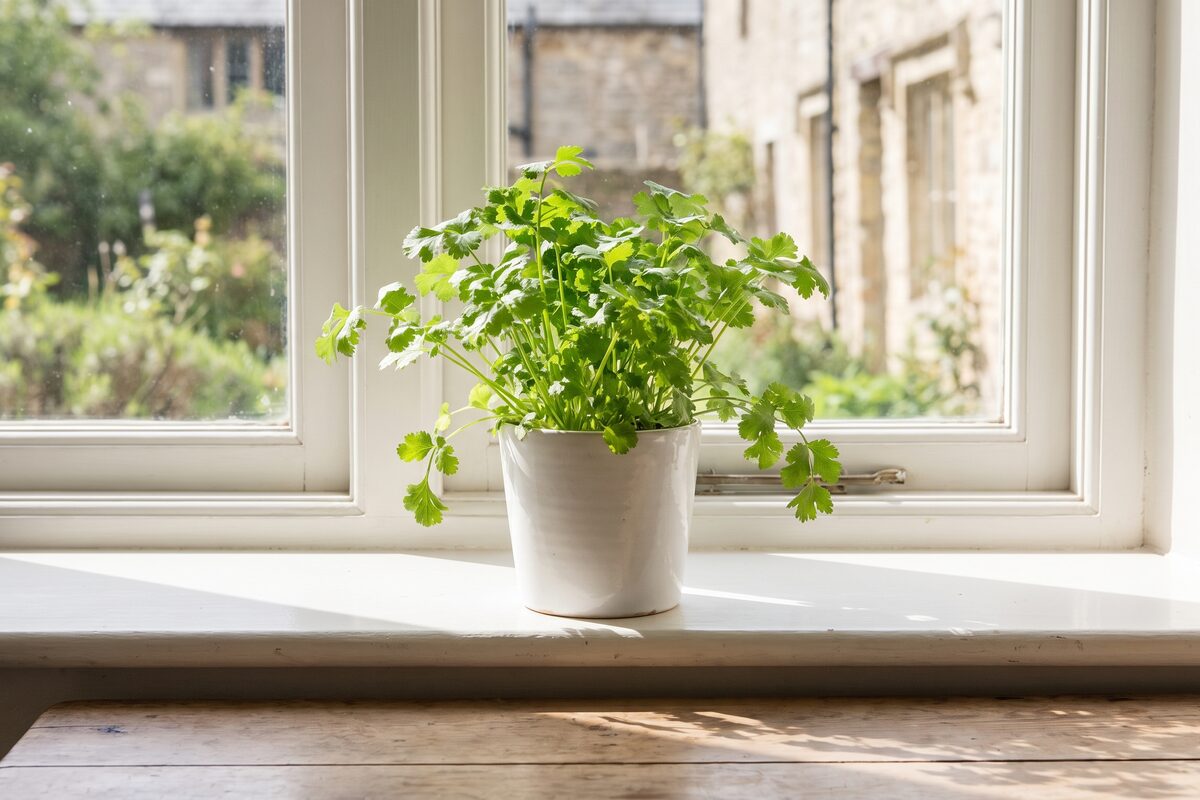
Grocery store herbs are goldmines for propagation. Cut a 4-inch stem just below a node (the point where leaves meet the stem), remove the lower leaves, and place the stem in a glass of water. Basil roots fast — often within a week. Mint is practically indestructible and roots even faster. Cilantro is more temperamental but still worth trying.
Once roots are an inch long, pot them up in a small container with well-draining potting mix. A self-watering pot makes herb growing almost effortless — the reservoir keeps moisture at root level without waterlogging.
→ Check Gardenix Self-Watering Pots on Amazon
Bok Choy and Napa Cabbage
Like celery, bok choy and cabbage have a base you can regrow. Cut the stalks away, leaving about an inch of the bottom. Place it in a shallow dish with a little water, cut-side up. In warm weather you'll see new leaf growth in 3–5 days. It won't grow back into a full head, but the tender inner leaves that appear are mild and delicious.
Ginger and Turmeric
If your fresh ginger root has developed little nubs or "eyes" — the same kind of eyes you see on potatoes — you can plant them and grow a new ginger plant. Break off a 1–2 inch piece with at least one eye, let it dry for a day, then plant it just below the surface of a pot of well-draining soil. Keep it in a warm spot with indirect light. Ginger is a slow grower but extremely rewarding — and a live ginger plant on your counter smells incredible.
Setting Up Your Scrap Garden
Water Method (for getting started)
Almost everything in this guide starts the same way: a shallow dish or glass of water on a bright windowsill. The water method is perfect for the first regeneration cycle. Keep these basics in mind:
- Use room temperature water — cold water slows root development
- Change it every 2 days to prevent sliminess and bacterial growth
- Keep the water level consistent — too deep can cause rot, too shallow dries out
- A south- or east-facing window is ideal for most regrowth
Soil Method (for long-term growing)
For anything you want to keep producing — herbs, green onions that have been through 3+ water cycles, celery that has rooted — move to soil. A good potting mix with some drainage (add a bit of perlite if it feels dense) gives roots the structure and nutrients they need.
A rectangular planter works beautifully for a multi-herb scrap garden. You can line up basil cuttings, a pot of green onions, and a propagated mint plant all in one spot.
→ Check SiliFine Rectangular Planter on Amazon
Light: The One Thing That Actually Matters
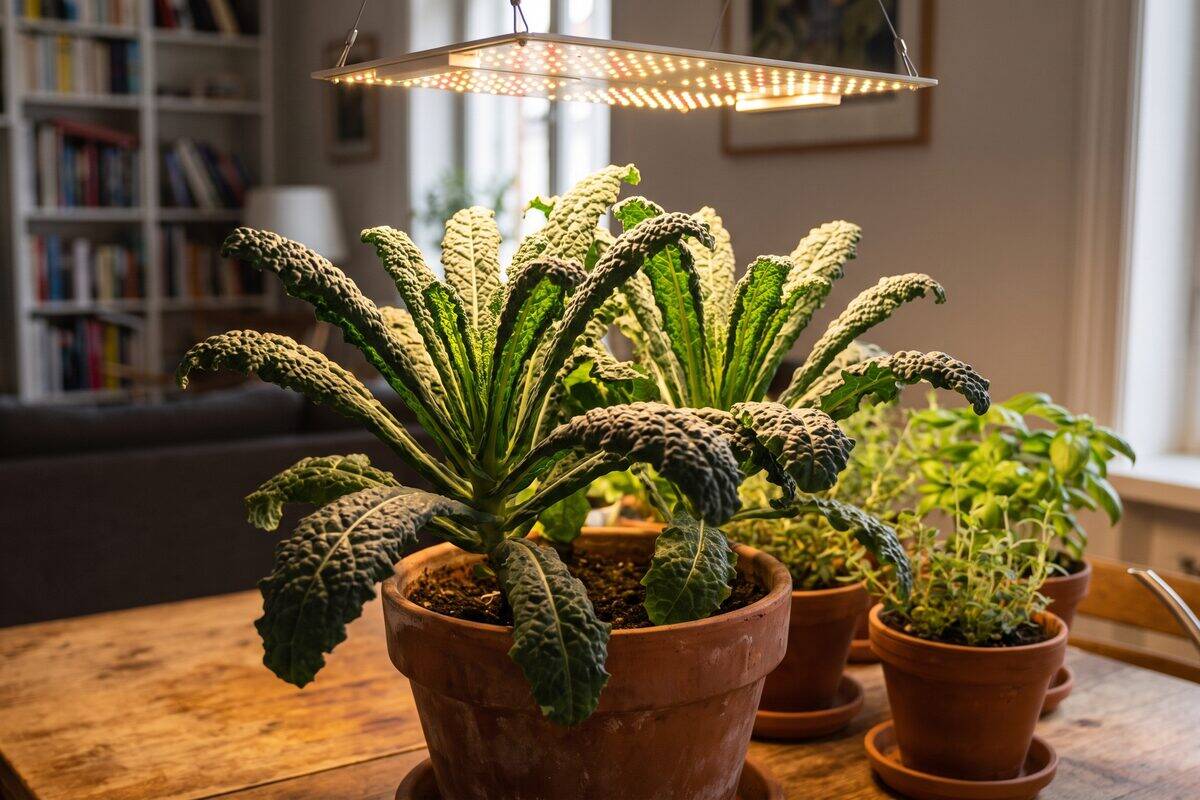
Here's where most kitchen scrap gardens slow down or stall: light. A windowsill that gets a few hours of weak winter sun isn't enough to drive meaningful regrowth in most herbs and leafy greens. If your plants look pale, leggy, or just aren't producing much, they need more light — not more water or fertilizer.
The fix is simple: add a grow light. Even a small clip-on lamp positioned 4–6 inches above your plants for 12–14 hours a day will dramatically accelerate regrowth. You'll see the difference in days.
→ Check GooingTop Clip Grow Lamp on Amazon
If you want to cover a longer shelf or kitchen counter, strip lights are more efficient and give more even coverage than a single bulb.
→ Check Barrina T5 Grow Light Strips on Amazon
Ready to Level Up? All-in-One Systems
If you've caught the bug and want a foolproof way to grow herbs fresh from the counter — not just regrowing scraps, but actually growing from seed — a self-contained garden system takes all the guesswork out of it. Built-in lights, automatic watering, and pre-seeded pods mean you literally just plug it in and harvest.
The Click & Grow Smart Garden 3 is one of the best entry points: compact, good-looking, and ridiculously easy. It's designed for kitchens and fits naturally next to your scrap propagation glasses.
→ Check Click & Grow Smart Garden 3 on Click & Grow
For a bigger harvest — basil, mint, cilantro, and a couple of vegetables all going at once — the Smart Garden 9 Pro gives you nine pods in a sleek countertop unit with a height-adjustable light arm.
→ Check Click & Grow Smart Garden 9 Pro on Click & Grow
If you want to go deep into hydroponics, the AeroGarden Sprout is another great all-in-one option — particularly good for herbs that are a bit fussier about moisture, like basil.
→ Check AeroGarden Sprout on Amazon
Common Questions
How many times can I regrow the same scrap?
Green onions can go through 3–4 cycles in water before the flavor diminishes. After that, plant in soil for continued growth. Lettuce bases are typically a one-time regrow. Herbs propagated from cuttings can live indefinitely once in soil.
Do I need special soil?
A quality all-purpose potting mix is fine. Avoid garden soil from outside — it's too dense for containers and can introduce pests. If you're growing in a self-watering pot, make sure your mix drains well; mix in 20–30% perlite if needed.
Why are my regrown greens pale or bitter?
Almost always: not enough light. Regrowing plants in dim conditions produce elongated, pale growth (etiolation) as they reach for light. Move to a brighter window or add a grow light. Bitterness in lettuce can also come from heat — keep it away from direct afternoon sun.
Can I regrow garlic?
Yes — sort of. A single garlic clove planted in a pot of soil will eventually produce garlic greens (the leafy tops), which you can chop and use like chives. To grow a full garlic bulb indoors is challenging and takes many months. But garlic greens from a clove? Easy and fast.
Your Counter is Already a Garden
The best part about kitchen scrap gardening is that the barrier to entry is literally nothing. Most of the tools you need are already in your kitchen — a glass, some water, and a windowsill. The scraps you need are coming from your next meal.
Start with green onions tonight. Put the root ends in a small glass of water and set it on your windowsill. In a week you'll have fresh scallions, and you'll start looking at every bunch of herbs and every celery base as a potential garden. That's how this works — one scrap at a time.