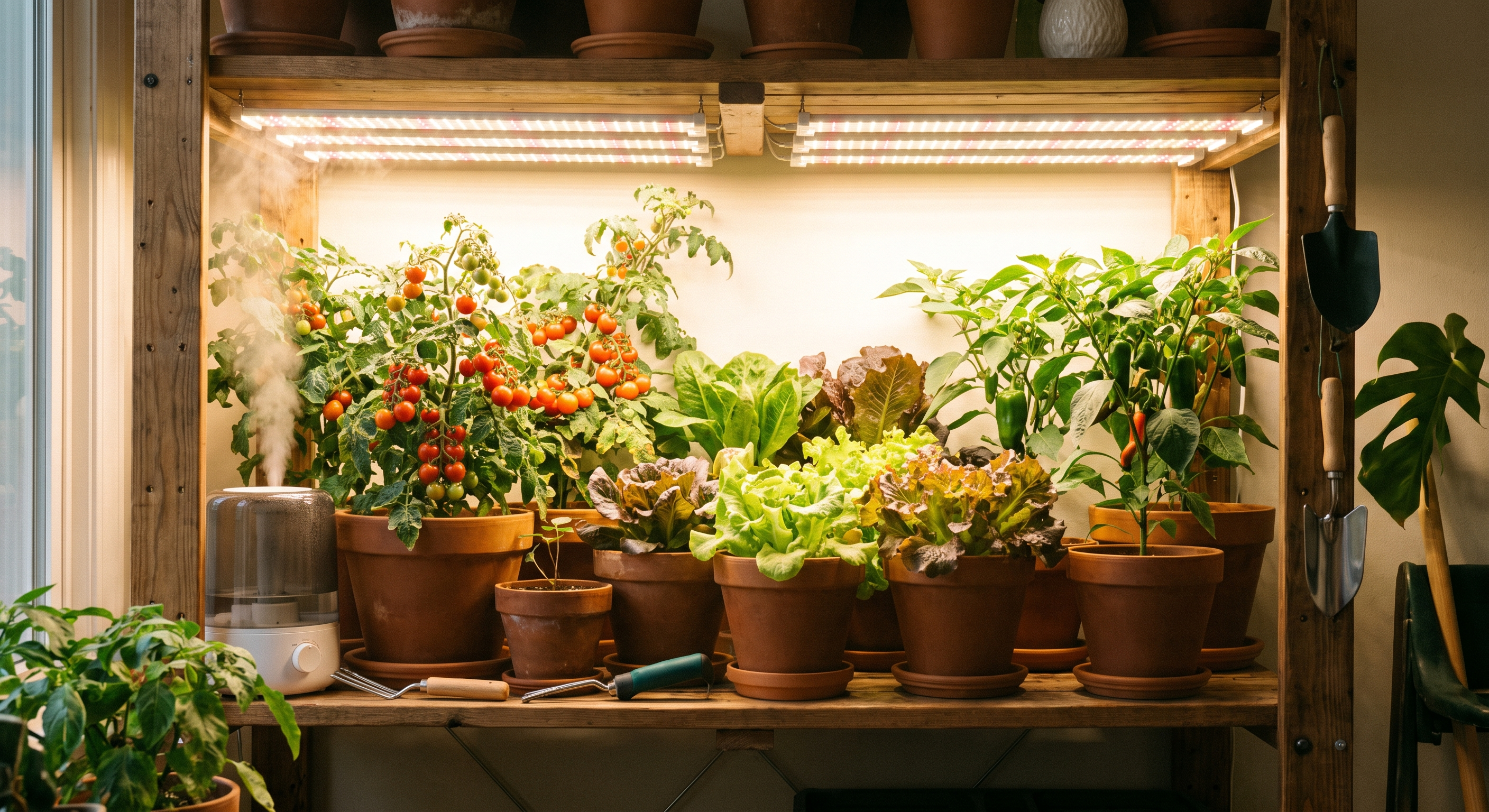
Growing tomatoes indoors is one of the most rewarding things a home gardener can do — but it's also one of the most demanding when it comes to light. If you've tried growing tomatoes on a windowsill and ended up with spindly plants and zero fruit, inadequate light is almost certainly the culprit. Tomatoes are high-light plants that need significantly more intensity and duration than herbs or leafy greens. The best grow lights for tomatoes deliver full-spectrum output, enough wattage to power fruiting, and the right mounting distance to keep plants compact and productive. In this guide, we break down exactly what specs matter, then walk through the top picks — with the VIPARSPECTRA P700 leading the pack as our best overall grow light for tomatoes indoors.
Our Top Picks at a Glance
- Best Overall: VIPARSPECTRA P700 — 70W full-spectrum panel, ideal for a 2×2 ft grow area
- Budget Pick: Barrina T5 Grow Light Strips — affordable 1FT linkable strips, great for seedlings and compact shelves
- Most Flexible: GooingTop LED Clip Lamp — gooseneck positioning, perfect for a single pot or container
What Tomatoes Actually Need From a Grow Light
Before you buy any light, understand what tomatoes require. This crop evolved in full tropical sun — it's not satisfied with the gentle glow that keeps your basil happy. Here's what the specs actually mean:
Light Hours (Photoperiod)
Tomato seedlings do best with 18–22 hours of light per day. Once established and moving into vegetative growth, aim for 14–18 hours. When plants start flowering and fruiting, dial back to 12–14 hours. Tomatoes are technically day-neutral, but more light generally means faster growth — up to a point. Always give plants at least 6 hours of darkness to rest.
PPFD (Light Intensity)
PPFD — photosynthetic photon flux density, measured in µmol/m²/s — is the real measure of usable light hitting your plant's canopy. For vegetative growth, tomatoes need around 400–600 µmol/m²/s. Once flowering and fruiting begin, they can use 600–900 µmol/m²/s. This is significantly higher than what herbs or lettuce require, which is why you can't just reuse a small herb light and expect tomatoes.
Wattage
A general rule of thumb: aim for at least 40–50 true watts per square foot for fruiting tomatoes. A 70W LED panel like the VIPARSPECTRA P700 covers a 2×2 ft area comfortably in vegetative mode and a 1.5×1.5 ft area during fruiting. If you're growing in a larger container or training plants to spread, you may want to daisy-chain a second unit.
Spectrum
Full-spectrum is non-negotiable. Tomatoes use blue light (400–500nm) for vegetative growth and red light (620–700nm) to trigger flowering and fruit set. Deep red at 660nm is especially important during the fruiting phase. A quality full-spectrum LED covers all of this, so you don't need to swap lights between growth stages.
Light Distance
Hang your grow light 18–24 inches above seedlings. As plants mature and enter the fruiting stage, you can lower to 12–18 inches for higher PPFD delivery. Watch for bleaching or leaf curl (too close) or stretching (too far). Dimmable lights give you more flexibility to dial in the right intensity without adjusting the hanging height constantly.
Best Overall: VIPARSPECTRA P700
The VIPARSPECTRA P700 is our clear top pick for growing tomatoes indoors. It delivers 70 true watts in a compact, lightweight panel that covers a genuine 2×2 ft footprint during vegetative growth — and narrows to 1.5×1.5 ft in flower mode for concentrated intensity right where tomatoes need it. The full-spectrum output covers blue and red wavelengths, with the dimming function letting you start seeds at lower intensity and ramp up as plants mature. It's also daisy-chainable, meaning you can link multiple units if your tomato grow space expands. At 11,000 lumens with a fan-free design (near-silent), it runs cool enough for a living space without overheating compact containers.
What sets the P700 apart from budget panels is consistency. The PPFD is distributed evenly across the coverage zone, so edge plants aren't getting dramatically less light than center plants. For a single container of cherry or determinate tomatoes in a 2×2 tent or shelf space, this is the light you want.
→ Check VIPARSPECTRA P700 on Amazon
Budget Pick: Barrina T5 Grow Light Strips
The Barrina T5 strips are the best entry-level option for starting tomato seedlings indoors or supplementing light on a grow shelf. This 4-pack of 1FT, 5000K full-spectrum strips is designed for plug-and-play installation — link them in series above a seed tray or shallow shelf and you have solid seedling coverage without the price tag of a full panel. The 5000K spectrum skews toward the blue end, making these better suited to vegetative and seedling stages than to fruiting. That said, for the early weeks of a tomato's life indoors, these strips punch well above their price point.
The strips are linkable, so you can chain multiple packs above a longer shelf if needed. If you're starting tomatoes from seed indoors before transplanting into a larger container under a more powerful light, the Barrina T5 is a practical, low-cost starting point.
→ Check Barrina T5 Strips on Amazon
Most Flexible: GooingTop LED Clip Lamp
If you're growing a single tomato plant in a pot — and you want a light that clips to a shelf, stake, or grow support without any overhead hardware — the GooingTop clip lamp is uniquely useful. The dual gooseneck design lets you position each light head independently, which matters when tomato plants grow tall and bushy. You can angle one head toward the lower canopy and one toward the upper growth, giving the whole plant better exposure than a fixed-position light would.
It's a full-spectrum LED, and it's designed for hydroponics and container growing. Coverage area is modest compared to a panel, so this isn't the right tool for large or multiple tomato plants. But for a single patio-style tomato on a kitchen counter or by a south-facing window that needs supplemental light, it earns its spot.
→ Check GooingTop Clip Lamp on Amazon
Setting Up Your Lights
Height and Timer
Start with your grow light 20–24 inches above the seedling tray. As true leaves develop and plants reach 6–8 inches, you can lower to 18 inches. Use a timer — this is not optional for tomatoes. Consistent light cycles are critical for both vegetative development and triggering flower set. For seedlings: 20 hours on, 4 off. For vegetative: 16 hours on, 8 off. For flowering and fruiting: 14 hours on, 10 off.
Vegetative vs. Fruiting Stage
During vegetative growth, tomatoes are building root mass, stem thickness, and canopy. Higher blue light and longer photoperiods favor this. Once flowers appear, shift to a slightly shorter day (14 hours) and if your light is dimmable, run it at full power — tomatoes at this stage are light-hungry. The VIPARSPECTRA P700's dimming function is useful here: start at 60% for seedlings and ratchet up to 100% once fruiting begins.
Signs Something Is Off
- Leggy, stretching plants: Light is too far away or intensity too low. Lower the fixture or increase power.
- Bleached or curled leaves: Light is too close or too intense. Raise the fixture or dim slightly.
- Slow flowering: May need longer high-intensity days or better red spectrum coverage.
Other Gear You'll Need
Light is the biggest variable for indoor tomatoes, but it's not the only one. Here's the supporting gear that makes the difference between a struggling plant and a productive one.
The Right Containers
Tomatoes need root space to thrive. Compact dwarf varieties can work in 5-gallon containers, but most cherry or determinate varieties do better with 7–10 gallons. The Lechuza Classico 35 is a premium self-watering planter that keeps soil moisture consistent — a real advantage for tomatoes, which are highly sensitive to irregular watering and blossom end rot from drought stress. The sub-irrigation reservoir means you water less frequently and the plant draws moisture as needed.
→ Check Lechuza Classico 35 on Amazon
For a more affordable self-watering option, the Gardenix self-watering pots work well for smaller determinate or patio tomato varieties. The wicking system keeps root zones consistently moist without waterlogging, and the planters come in sizes that suit a single productive plant.
→ Check Gardenix Self-Watering Pots on Amazon
If you prefer fabric pots for better root aeration, the SiliFine rectangular planter is breathable and works well on shelves or under grow lights because of its flat profile.
→ Check SiliFine Rectangular Planter on Amazon
pH Management
If you're growing tomatoes in a soilless or hydroponic setup — which is common under grow lights — pH management is essential. Tomatoes prefer a pH of 5.8–6.5 in hydroponic media, and nutrient lockout is one of the most common causes of yellowing leaves and poor fruit set. The General Hydroponics pH Control Kit includes both pH Up and pH Down solutions plus a test kit, covering everything you need to keep your nutrient solution in range.
→ Check General Hydroponics pH Kit on Amazon
Humidity
Indoor environments — especially in winter — can drop below 40% relative humidity, which stresses tomatoes and makes them more susceptible to blossom drop. Tomatoes prefer 50–70% humidity during flowering. If your grow space runs dry, a small room humidifier helps. The LEVOIT humidifier is compact, quiet, and has an auto shut-off so you can leave it running overnight near your grow space without worry.
→ Check LEVOIT Humidifier on Amazon
Final Verdict
If you want to actually harvest tomatoes indoors — not just keep plants alive — invest in a proper grow light designed for fruiting crops. The VIPARSPECTRA P700 is the one we'd recommend for most indoor tomato growers: it covers the right footprint, delivers the intensity tomatoes need at fruiting stage, and the dimmable function lets you dial it in from seedling through harvest without swapping fixtures.
For those starting from seed on a budget, the Barrina T5 strips get seedlings off to a strong start at minimal cost. For a single container tomato on a countertop, the GooingTop clip lamp keeps things flexible and compact. Pair any of these with the right container, consistent pH management if you're growing in soilless media, and a reliable timer — and you'll be far ahead of most indoor tomato growers.
Light is the limiting factor. Get it right and tomatoes will reward you with genuine harvests, not just ornamental plants.