Best Fertilizer for Edible Indoor Plants
Growing edible plants indoors is incredibly rewarding, offering fresh herbs, crisp greens, and even small fruits right from your kitchen counter or windowsill. However, unlike outdoor plants, indoor plants rely entirely on you for their nutrition. The right fertilizer isn't just a boost — it's essential for vigorous growth, bountiful harvests, and the best flavor from your homegrown edibles.
This comprehensive guide will walk you through everything you need to know about fertilizing indoor edible plants, from understanding NPK ratios to selecting organic options safe for your family and the environment.
Why Indoor Edible Plants Need Fertilizer
Plants get energy from sunlight (or grow lights) and water, but they extract essential nutrients from soil. In outdoor gardens, the soil ecosystem constantly replenishes nutrients through decomposing organic matter and microbial activity. Indoors, plants are confined to pots with limited potting mix. While potting mixes start nutrient-rich, these nutrients deplete quickly as plants grow. Without replenishment, plants suffer from nutrient deficiencies, stunted growth, yellowing leaves, poor yields, and increased pest susceptibility. Regular fertilization ensures your plants have the building blocks they need to thrive.
Understanding NPK Ratios
Every fertilizer label displays three numbers representing the NPK ratio: Nitrogen (N), Phosphorus (P), and Potassium (K). Understanding these helps you choose the right fertilizer for your plants' growth stage.
- Nitrogen (N): Promotes leafy, vegetative growth. Essential for herbs and leafy greens.
- Phosphorus (P): Supports root development and flowering. Important for fruiting plants.
- Potassium (K): Strengthens overall plant health and disease resistance.
For leafy greens and herbs, use a nitrogen-heavy formula (higher first number). For fruiting plants like tomatoes and peppers, use balanced or phosphorus-heavier formulas.
Best Fertilizer Products
Here are the top fertilizer options for indoor edible plants, from organic choices to hydroponic-specific formulas:
Best Organic Liquid Fertilizer
Espoma Organic Indoor Plant Food is a gentle, plant-based liquid fertilizer perfect for herbs and greens. It's made from natural ingredients and won't burn delicate indoor plants. The balanced formula (3-1-2) works well for most edible plants in containers.
→ Check Espoma Organic Indoor Plant Food on Amazon
Best Fish Fertilizer
Neptune's Harvest Organic Fish & Seaweed Fertilizer is a powerful organic option combining fish emulsion and seaweed extract. Rich in trace minerals and amino acids, it promotes vigorous leafy growth and is excellent for herbs, greens, and vegetables. The 2-3-1 ratio supports overall plant health.
→ Check Neptune's Harvest Fish & Seaweed on Amazon
Best Granular Organic Fertilizer
Jobe's Organics All-Purpose Granular Fertilizer is a slow-release dry fertilizer with a 4-4-3 ratio. Mix it into potting soil before planting, and it gradually releases nutrients over time. Perfect for gardeners who prefer not to fertilize frequently. Contains mycorrhizae for better nutrient uptake.
→ Check Jobe's Organics Fertilizer on Amazon
Best Worm Castings
Worm castings are nature's perfect fertilizer — the nutrient-rich byproduct of vermicomposting. Mix them directly into potting soil or brew "worm tea" for liquid feeding. They're slow-release, gentle, and loaded with beneficial microbes. No specific NPK ratio needed — they're naturally balanced.
→ Check Worm Castings on Amazon
Best All-Purpose Organic Fertilizer
Dr. Earth Organic & Natural Pure Gold All Purpose Fertilizer offers a 4-6-2 ratio emphasizing phosphorus for blooming and fruiting. It's OMRI-certified organic, contains mycorrhizae and beneficial bacteria, and works for all edible plants from seedlings to mature plants.
→ Check Dr. Earth Pure Gold Fertilizer on Amazon
Best Vegetative Growth Fertilizer
FoxFarm Grow Big is a liquid concentrate with a 6-4-4 ratio designed for vigorous leafy growth. It's particularly effective for herbs and leafy greens during their growth phase. Mix with water and apply every 1-2 weeks for best results.
→ Check FoxFarm Grow Big on Amazon
Best for Hydroponics
General Hydroponics FloraGro is formulated specifically for hydroponic systems and soil-less growing. The 2-1-6 ratio supports root development and plant structure. If you're using a hydroponic system like an AeroGarden or iDOO, this is your best choice.
→ Check General Hydroponics FloraGro on Amazon
Best Budget Organic Option
Botanicare Pure Blend Tea Grow is an affordable organic liquid concentrate with a 0.5-0.5-1.0 ratio. It's gentle enough for seedlings and provides steady, balanced nutrition. Perfect for budget-conscious growers who still want organic quality.
→ Check Botanicare Pure Blend Tea on Amazon
Organic vs. Synthetic Fertilizers
Organic fertilizers: Derived from natural sources (plants, animals, minerals). They work slowly but build soil health long-term and are safer for edible plants. Perfect for indoor container gardening where you want to avoid chemical residue.
Synthetic fertilizers: Fast-acting chemicals that provide immediate nutrient availability. Results are visible quickly, but they can accumulate in soil over time. Many gardeners avoid them for edible plants due to safety concerns.
For indoor edible gardening, organic is generally recommended for safety and flavor.
Fertilizing by Plant Type
Leafy Greens & Herbs: Use nitrogen-heavy fertilizers (higher first number in NPK). Fertilize every 2-3 weeks during the growing season. Examples: 6-4-4 or 4-1-1 ratios.
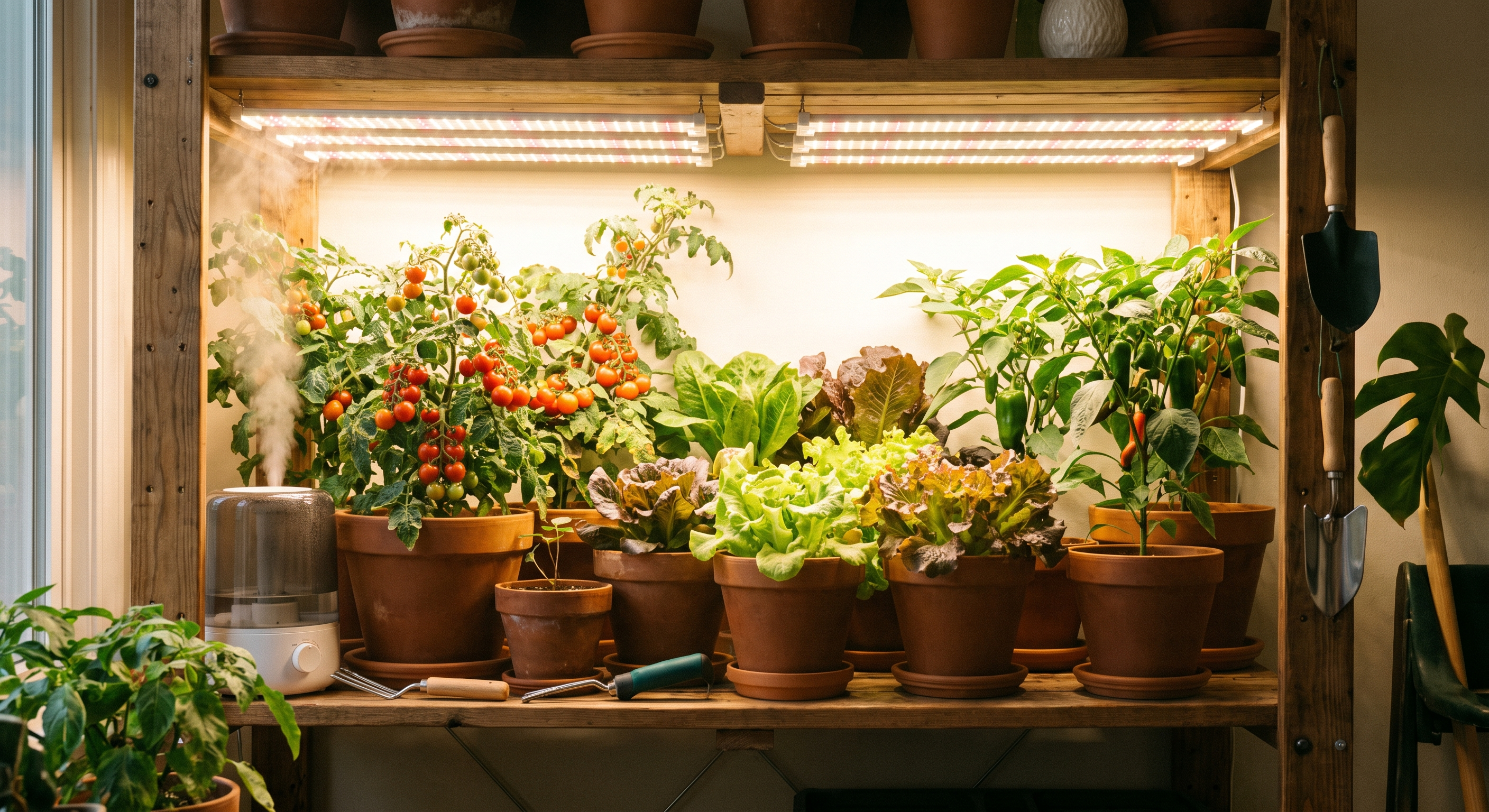
Fruiting Plants (tomatoes, peppers): Start with balanced fertilizer (equal NPK), then switch to phosphorus-heavy (higher middle number) once flowering begins. Fertilize every 1-2 weeks once fruit production starts. Examples: 2-7-4 or 1-2-2 ratios.
Microgreens: Generally don't need fertilizer if grown in quality potting mix. They're harvested before nutrient depletion occurs.
How to Fertilize Indoors
Liquid fertilizers: Mix according to label instructions (usually 1/4 to 1/2 strength for indoor plants). Apply every 1-3 weeks. Water the soil, not the leaves, to avoid foliar burn.
Granular/dry fertilizers: Mix into potting soil before planting, or sprinkle around the base and water in. Release nutrients slowly over months.
Slow-release pellets: Ideal for container gardening. One application lasts months. Convenient for busy gardeners.
Signs of Nutrient Deficiency
- Yellowing leaves: Often nitrogen deficiency
- Purple-tinted leaves: Phosphorus deficiency
- Brown leaf edges: Potassium deficiency
- Stunted growth: General nutrient deficiency; increase fertilization frequency
- Poor fruit production: Usually phosphorus or potassium deficiency
Final Verdict
The best fertilizer for your indoor edible garden depends on what you're growing and your preference for organic or synthetic options. For most gardeners, a balanced organic liquid fertilizer applied every 2-3 weeks works perfectly. If you're growing greens, go nitrogen-heavy. For fruiting plants, use balanced or phosphorus-heavy formulas.
Whichever fertilizer you choose, consistent application is key. Healthy, well-fed indoor plants produce faster harvests, better flavor, and more abundant yields. Start with your choice from the list above, observe your plants' response, and adjust frequency or formula based on what you see. Happy growing!