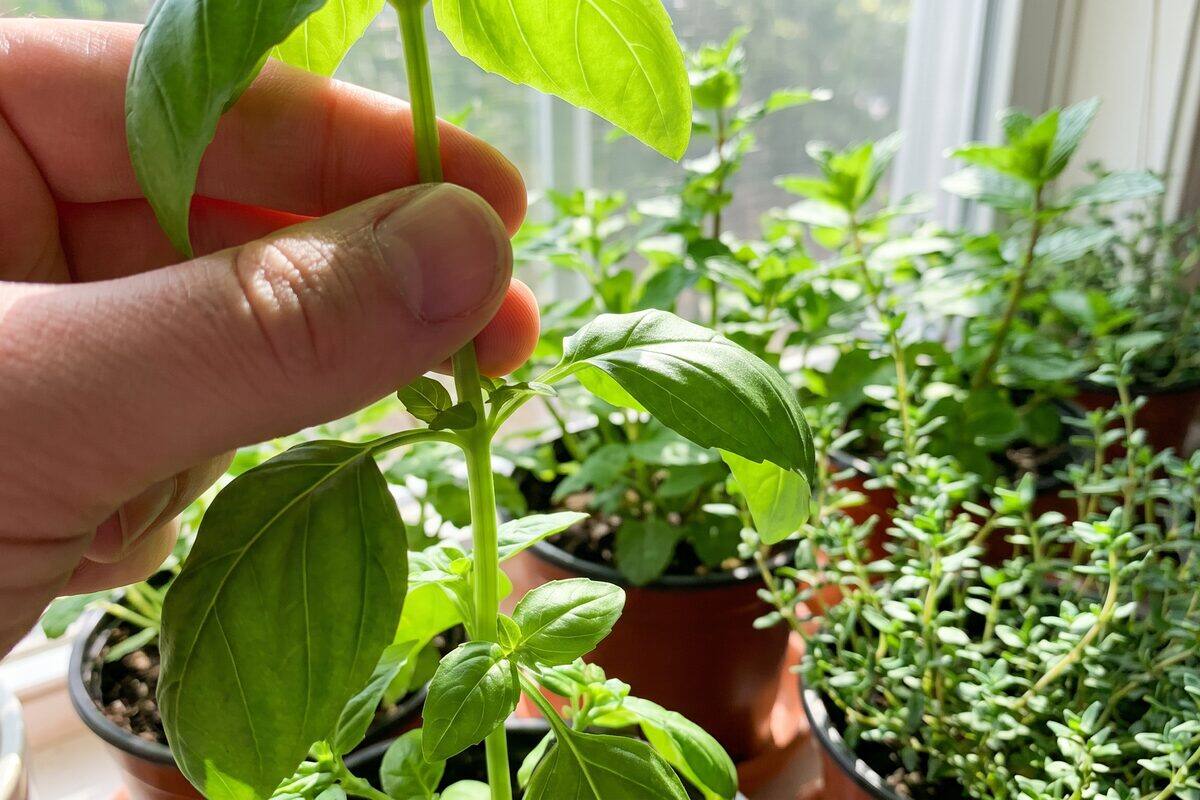
How to Harvest Basil Without Killing the Plant
Basil is one of the most rewarding herbs you can grow indoors — fragrant, fast-growing, and endlessly useful in the kitchen. But there's a problem most new growers run into almost immediately: they pick a few leaves here and there, the plant shoots straight up, flowers appear, and within weeks the whole thing turns bitter and dies. Sound familiar?
The good news is this is completely avoidable. Harvesting basil the right way — using a technique called pinching — actually makes the plant grow fuller, bushier, and more productive. Done correctly, a single indoor basil plant can keep you supplied with fresh leaves for months. This guide walks you through exactly how to do it.
Why Most People Kill Their Basil When Harvesting
The instinct when harvesting herbs is to pluck individual leaves from the bottom or sides of the plant. With basil, this is exactly backwards. Removing lower leaves doesn't stimulate new growth — it just strips the plant bare over time. Worse, if you leave the central stem untouched, basil will race toward flowering (called bolting) as fast as possible.
Once basil bolts — producing flowers and seeds — the plant's energy shifts away from leaf production. The leaves become smaller, tougher, and noticeably more bitter. The plant is essentially done with its vegetative stage and focused entirely on reproduction. Your job as the grower is to delay that process as long as possible, and pinching is the primary tool for doing it.
The Pinching Technique: How It Works
Pinching means removing the growing tip of a stem just above a pair of leaf nodes. When you do this, the plant stops growing vertically on that stem and instead redirects energy to the two buds sitting just below the cut. Each of those buds grows into a new branch, doubling the number of productive stems. Repeat this across the plant over several weeks, and you end up with a full, bushy plant instead of a tall, spindly one.
Here's the step-by-step:
- Find a stem with at least 3 pairs of leaves. Don't harvest stems that are too young — you want the plant to have enough foliage to support regrowth.
- Locate the second or third set of leaf nodes from the top. You're looking for the point where two leaves meet the stem.
- Pinch or cut just above that node. Use your fingers for young, soft growth, or use clean shears for thicker stems. Either way, cut cleanly — don't tear.
- Leave at least one or two sets of leaves on the stem. The remaining leaves will power the regrowth.
- Repeat across the plant. Work your way around, pinching the tallest or most advanced stems first.
The result: you get a handful of fresh basil to use in the kitchen, and the plant responds by branching out rather than stretching up.
A good pair of herb shears makes this much easier, especially as the plant matures and stems get woodier. Sharp, clean cuts also reduce the risk of bruising or tearing, which can invite disease.
→ Check Fiskars Herb Shears on Amazon
When to Start Harvesting
Wait until your basil plant is at least 6–8 inches tall and has developed 3–4 sets of leaves on each stem before you take your first harvest. Harvesting too early stresses the plant before it has the root system and leaf area needed to bounce back quickly.
If you're starting from seed, expect to wait about 3–4 weeks from germination before the first harvest is appropriate. Transplants from a nursery may be ready sooner, depending on their size when you bring them home.
Starting your own basil from quality seed gives you more control over the variety and growing conditions from day one.
How Much to Harvest at Once
A common guideline is to never remove more than one-third of the plant at a single harvest. This gives the plant enough remaining leaf area to continue photosynthesizing and recovering quickly. If you strip too much at once, the plant may slow down significantly or go into shock, especially if it's already under any other stress like low light or inconsistent watering.
In practice, for a medium-sized indoor basil plant, one-third usually translates to a good handful of stems — plenty for a batch of pesto, a Caprese salad, or a week's worth of garnishes.
As the plant matures and branches out due to repeated pinching, each harvest can become more generous while still staying within the one-third rule.
Preventing Bolting: Catch It Before It Happens
Bolting is triggered by a combination of factors: day length, heat, and stress. Indoors, you have more control over these variables than outdoor growers, which is one of the real advantages of growing basil inside.
Watch for flower buds forming at the tops of stems — they look like tight clusters of small leaves at the growing tip, distinct from the regular leaf nodes. As soon as you see them, pinch them off immediately. Don't wait. Once a stem flowers, that stem is essentially done producing palatable leaves.
Regular pinching naturally delays bolting by preventing the plant from reaching the stage where it "decides" to flower. Think of it as resetting the clock each time you harvest.
Consistent, adequate light also helps. Basil needs 6–8 hours of direct light per day minimum. Near a bright south- or west-facing window, many indoor setups can meet this. But in dimmer conditions or during winter months, supplemental grow lighting becomes important to keep basil in active vegetative growth and less prone to stress-induced bolting.
A compact clip-on grow light positioned directly above your basil gives targeted light without taking up much space on a countertop or windowsill.
→ Check GooingTop Clip Grow Light on Amazon
If you're growing multiple herbs or a larger setup, a full-spectrum T5 LED strip light mounted overhead provides even, consistent coverage across several plants.
→ Check Barrina T5 LED Grow Lights on Amazon
Container Choice Matters More Than You'd Think
Basil has a robust root system for an herb, and it doesn't thrive when rootbound. A pot that's too small restricts root growth, which limits the plant's ability to take up water and nutrients — and a stressed, underfed basil plant bolts faster.
For a single plant, aim for at least a 6-inch pot with good drainage. For multiple plants or a larger specimen you plan to harvest heavily, an 8–10 inch container is better. Self-watering planters are particularly useful for basil because they maintain more consistent soil moisture — basil likes evenly moist (not waterlogged) soil and will wilt quickly if it dries out completely.
A self-watering planter with a reservoir takes the guesswork out of watering frequency, especially helpful if your schedule is unpredictable.
→ Check Gardenix Self-Watering Planter on Amazon
If you prefer something more aesthetic for a kitchen countertop, a high-quality European-style planter with a built-in sub-irrigation system is a durable, attractive option.
→ Check Lechuza Classico 28 Planter on Amazon
Hydroponic Basil: Even Faster, Even Easier
Soil-grown basil is fantastic, but hydroponic basil is a level up in terms of growth speed and harvest consistency. Without soil, the roots have direct access to nutrient-rich water, and basil responds with noticeably faster growth and larger leaves. The pinching rules still apply — in fact, they matter even more with hydroponics because the plants grow so vigorously.
Hydroponic herb garden systems take most of the guesswork out of the process. The AeroGarden Sprout, for example, handles lighting automatically and alerts you when the reservoir needs topping up. It's designed specifically for herbs like basil and produces impressive results in a compact countertop footprint.
→ Check AeroGarden Sprout on Amazon
For households that want to grow basil alongside multiple other herbs simultaneously, the Click & Grow Smart Garden 9 Pro offers nine growing pods with automated watering and compatible basil pods — no growing experience required.
→ Check Click & Grow Smart Garden 9 Pro
A Harvest Schedule That Actually Works
One of the most common mistakes is harvesting too infrequently. Growers wait until the plant is huge, then take a big harvest, then wait again. This leads to an uneven growth pattern and gives the plant more opportunity to bolt between harvests.
A better approach is to harvest lightly and frequently — every 1–2 weeks during active growing season. Each pinch stimulates branching, so the more often you harvest (within reason), the bushier and more productive the plant becomes. It's counterintuitive, but the more you take, the more you get.
Keep a rough mental note of where you last pinched, and rotate around the plant so you're not repeatedly hitting the same stems. This gives each branch time to develop new growth between harvests.
Storing Your Harvest
Fresh basil bruises easily and is sensitive to cold. Don't refrigerate freshly harvested basil — the cold damages the cells and turns leaves black within hours. Instead, treat it like a flower: trim the stems and stand them in a glass of water at room temperature, loosely covered with a plastic bag. Stored this way, fresh basil will keep for several days.
For longer storage, basil freezes reasonably well. Blend fresh leaves with a small amount of olive oil and freeze in ice cube trays — ready to drop into sauces, soups, or pastas straight from the freezer.
Signs Your Basil Needs Help
Even with correct harvesting technique, basil can struggle if other conditions aren't right. Watch for these warning signs:
- Yellowing leaves: Usually indicates overwatering, poor drainage, or nitrogen deficiency. Check that the pot isn't sitting in standing water.
- Leggy, stretched growth: Not enough light. Move closer to the window or add a grow light.
- Wilting despite moist soil: Root rot from overwatering. Let the soil dry slightly between waterings and ensure drainage holes are clear.
- Rapid bolting despite pinching: Usually a light or temperature issue. Basil prefers temperatures between 65–85°F and doesn't like drafts or cold windowsills in winter.
- Small, pale leaves: Nutrient deficiency. Soil-grown basil benefits from a diluted balanced liquid fertilizer every 2–3 weeks during active growth.
The Long Game
Even with perfect technique, basil is not a forever plant. Most indoor basil plants have a productive lifespan of roughly 4–6 months before they inevitably become woody, slow to produce, and increasingly prone to bolting regardless of pinching. This is normal — it's an annual herb completing its life cycle.
The practical solution is succession planting: start new seeds every 6–8 weeks so you always have a young, productive plant coming up behind your current one. Two or three plants at different stages means you're never without fresh basil.
With a small herb garden system, you can keep multiple basil plants — or basil alongside other herbs — in a compact, managed setup that makes succession planting simple and space-efficient.
→ Check Click & Grow Smart Garden 3
Summary: The Rules That Matter
Harvesting basil successfully comes down to a handful of principles you'll internalize quickly:
- Always pinch above a leaf node — never pull individual leaves from the bottom
- Don't harvest until the plant has at least 3–4 sets of leaves per stem
- Never remove more than one-third of the plant at once
- Pinch flower buds the moment they appear
- Harvest frequently (every 1–2 weeks) rather than in large, infrequent sessions
- Provide adequate light — at least 6–8 hours of bright light daily
- Keep soil consistently moist but never waterlogged
Follow these rules and you'll get months of fresh, flavorful basil from a single plant. Once you've done it once, the technique becomes second nature — and you'll never go back to buying those sad little grocery store pots that die within a week.